English
  Deutsch
  Español
  italiano
  português
  العربية
  Türkçe
  български
  Polska
  română
  தமிழ் மொழி
Tel:
+86 15618559327
+86-185 2024 2587

A solar tracker can know its own position, a drive can report its operating status, and a weather station can continuously measure site conditions. The challenge begins when all of this information exists at the same time but is scattered across different devices and communication points. For plant operators, having more data does not automatically mean having better control. What matters is whether that information can be brought together, interpreted, and used to identify problems quickly.
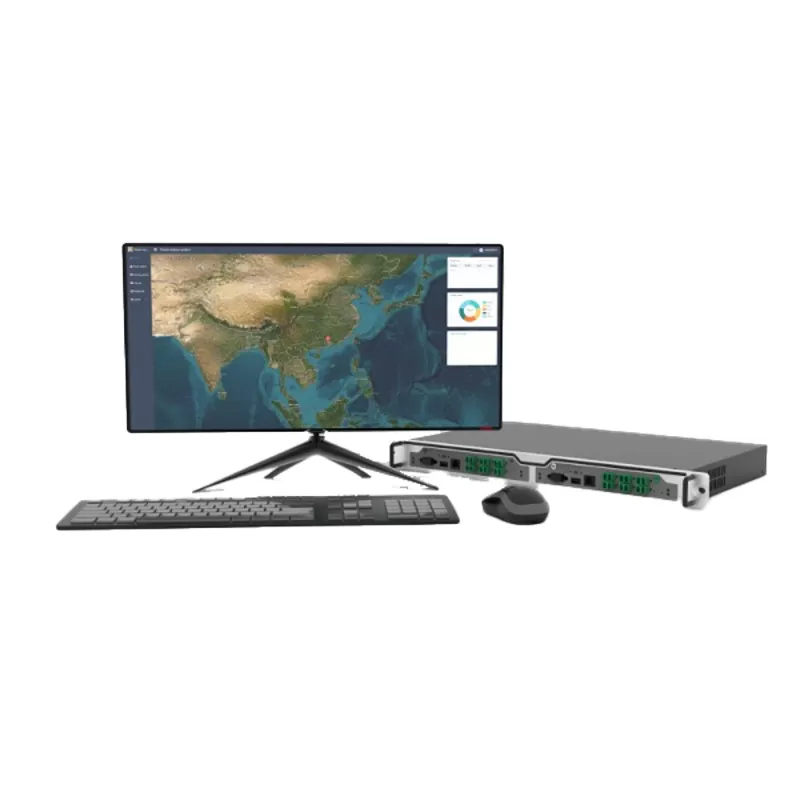
This is the role of a SCADA control system in a solar plant. SCADA provides a centralized supervisory layer that connects information from distributed equipment and presents it in a form that operators can use. In tracker-based PV plants, this may include tracker position, drive status, communication alarms, weather measurements, inverter information, and historical operating data.
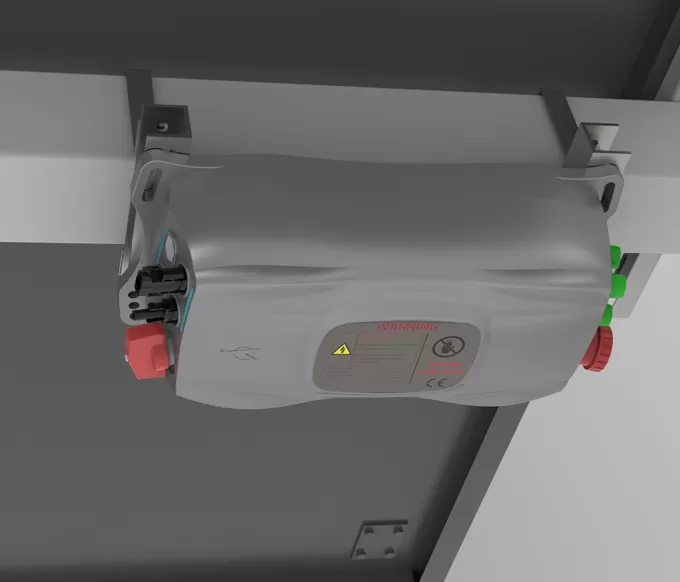
The architecture works best when SCADA and local tracker control are treated as two different levels of the same system. The tracker controller remains responsible for local movement and drive-related logic, while the SCADA control system provides plant-level monitoring and supervisory functions. Between these layers, reliable field communication is essential. A properly configured network communication box can form part of this infrastructure, helping connect distributed tracker equipment with the wider plant communication network.
A utility-scale PV plant is a distributed industrial system rather than a single piece of equipment. Trackers, inverters, weather stations, meters, combiner equipment, and communication devices may be installed across a large site and operate at the same time.
Each device can generate useful information, but individual device data has limited value if operators cannot see the relationship between different parts of the plant. For example, a tracker communication alarm may initially appear to be a tracker problem when the actual cause is a network interruption. Similarly, an unusual tracker position may need to be evaluated together with wind conditions, drive status, or controller feedback.
A SCADA control system brings these different information sources into a centralized monitoring environment. Operators can review overall plant conditions, identify abnormal equipment, and then investigate individual devices when necessary. This makes the monitoring process more structured and reduces the need to check field equipment one controller at a time.
Supervisory control also creates a useful boundary between plant-level monitoring and local equipment control. Local controllers can continue executing their defined control logic, while SCADA provides operators with a broader operational picture. The exact functions available through SCADA depend on the plant architecture, tracker controller, communication protocols, and control philosophy.
Tracker control and SCADA should not be viewed as competing systems. They operate at different levels. The tracker controller is closer to the mechanical system and is responsible for functions such as position control, drive operation, feedback processing, and local fault handling. SCADA operates at a higher level and focuses on centralized supervision.
This distinction becomes particularly useful when a solar plant contains many tracker rows. An operator may need to determine whether a group of trackers is operating normally without manually opening the interface of every controller. Through the SCADA control system, selected information can be collected and displayed according to the plant's operating structure.
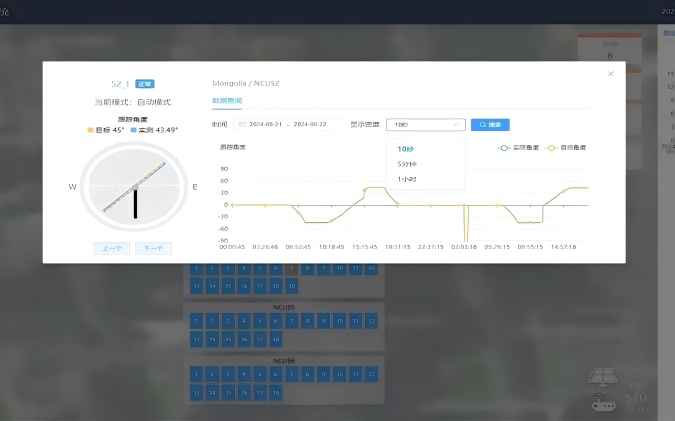
For example, the SCADA interface may show the commanded and actual tracker position, drive status, communication state, or active alarms. If one section of the plant reports abnormal communication while other sections remain online, the operator can use this information to narrow the potential fault area.
SCADA can also provide historical information. A temporary tracker deviation may not require immediate intervention, but repeated deviations over time could indicate a problem that deserves maintenance attention. Historical data gives the O&M team a way to look beyond the current operating state.
The goal of SCADA integration should not be to collect every available parameter simply because the device can provide it. Excessive information can make a monitoring interface harder to understand. A better approach is to identify which data points support actual operating, troubleshooting, and maintenance decisions.
| Data Category | Typical Information | Operational Purpose |
|---|---|---|
| Tracker position | Actual angle, commanded angle, position status | Helps identify tracking deviations |
| Drive condition | Run status, fault status, drive feedback | Supports equipment diagnosis |
| Communication | Online or offline state, communication alarms | Helps separate network issues from equipment faults |
| Weather | Irradiance, wind, temperature and related measurements | Provides environmental context |
| Inverter information | Operating state, alarms and selected electrical data | Connects tracker behavior with plant performance |
| Historical information | Trends, events and alarm records | Supports troubleshooting and O&M analysis |
For solar tracker applications, the relationship between these data categories can be more useful than any individual value. A tracker position alarm, for example, becomes easier to interpret when the operator can also see drive status and communication condition.
Zeyang's SCADA control system is designed for supervisory monitoring and control applications involving distributed equipment. The appropriate data points and control functions should always be determined according to the actual plant architecture and project requirements.
A centralized SCADA interface depends on the communication network beneath it. Solar plants can have field devices distributed over significant physical distances, so communication design needs to account for network topology, protocols, environmental conditions, power arrangements, device density, and maintenance access.
The architecture should clearly define how tracker controllers communicate with field network equipment and how the resulting information reaches the supervisory system. It should also define what happens when communication is interrupted. A SCADA screen showing an offline tracker is useful only when the maintenance team can determine whether the problem is associated with the tracker controller, communication equipment, network connection, or another part of the system.
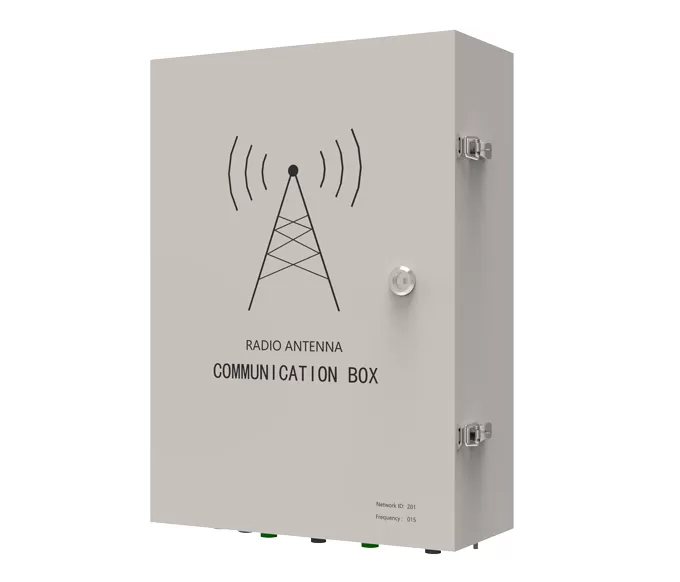
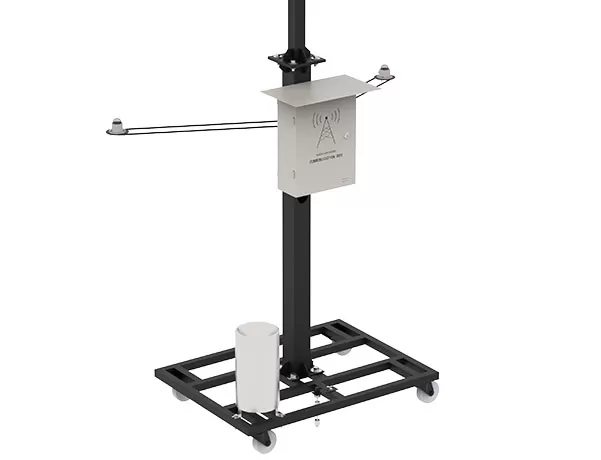
This is where a network communication box can become an important part of the field infrastructure. Depending on the project design, the network communication box can provide an organized location for communication equipment and help connect distributed devices to the plant network.
A network communication box should therefore be evaluated as part of the complete communication architecture rather than simply as a physical enclosure. Its interfaces, installation environment, power requirements, network connections, equipment arrangement, and maintenance accessibility can all affect the reliability of field communication.
For tracker applications, a well-planned network communication box can also make field installation more consistent. Communication equipment can be organized according to the plant's network structure, making it easier for technicians to identify connections and troubleshoot communication paths when necessary.
The SCADA control system and network communication box have different functions, but they are closely related. SCADA provides the supervisory environment where information is viewed and managed, while the communication infrastructure provides the path through which field information reaches that environment.
A typical data path may begin with a tracker controller collecting local position and drive information. That information passes through the field communication network and eventually reaches the SCADA platform. A network communication box may be used within the field section to organize communication equipment and connections.
At the supervisory level, the SCADA control system receives selected data, maps it to the appropriate device or plant area, and presents the information through dashboards, alarms, trends, or other interfaces. This separation makes it easier to identify where a problem is occurring.
For example, if several tracker rows in the same field area suddenly appear offline, the operator should not automatically assume that every tracker controller has failed. A common communication path may be the more likely area to investigate. Centralized monitoring can provide the information needed to make that distinction before sending technicians into the field.
The value of a SCADA control system is not measured simply by the number of parameters displayed on the screen. The system becomes useful when the information supports practical decisions.
Alarm management is one of the most important examples. A drive fault, tracker communication loss, position deviation, and environmental warning may have different operational priorities. If all alarms are presented with the same level of urgency, operators can quickly become overloaded with information.
A well-structured SCADA system can organize alarms according to equipment, plant area, condition, or priority. This gives O&M personnel a clearer starting point when investigating an abnormal event.
Historical trends can provide another advantage. A single tracker deviation may be an isolated event, while repeated deviations may indicate a recurring mechanical, electrical, or communication issue. Reviewing historical data alongside weather and inverter information can provide additional context before maintenance decisions are made.
This approach can also reduce unnecessary field inspections. Instead of immediately checking a large number of tracker rows, technicians can use centralized information to narrow the potential problem area. The final diagnosis still requires appropriate field verification, but SCADA can make the investigation more focused.
Not every SCADA platform is equally suitable for a solar tracker application. The most appropriate solution depends on the equipment being integrated, the required data, the communication architecture, and the operating practices of the plant.
| Evaluation Area | What to Examine | Why It Matters |
|---|---|---|
| Protocol compatibility | Supported communication protocols and interfaces | Determines how easily field equipment can be integrated |
| Tracker integration | Position, drive, alarm and communication data mapping | Provides useful tracker-level visibility |
| Alarm management | Alarm priorities, event records and history | Helps operators focus on actionable conditions |
| Network architecture | Topology, field communication and fault handling | Affects reliability and troubleshooting |
| Data management | Historical trends, records and reporting | Supports O&M analysis |
| Scalability | Support for additional equipment and plant areas | Allows the system to accommodate future requirements |
| Cybersecurity | Access control and network security practices | Helps protect supervisory infrastructure |
When comparing solutions, it is better to evaluate the complete system rather than focusing only on the appearance of the SCADA interface. Protocol support, data mapping, field communication, alarm configuration, documentation, and maintenance procedures can have a greater effect on long-term usability.
For project teams reviewing available control and communication products, Zeyang's product range provides a convenient starting point. The final selection should be based on the actual tracker configuration, plant network, environmental conditions, and required supervisory functions.
A supplier should be able to explain not only what the SCADA platform can display, but also how the system will communicate with the equipment in the field. Questions about protocol compatibility, tracker data mapping, alarm management, historical records, remote access, and cybersecurity should be addressed before implementation.
The role of the network communication box should also be clearly defined. A supplier should be able to explain where the communication equipment is located, how tracker controllers connect to the network, how communication faults are detected, and how technicians can access the relevant equipment during maintenance.
Documentation is another practical consideration. Network diagrams, communication lists, data maps, alarm definitions, interface specifications, and commissioning procedures can make system deployment and future troubleshooting considerably easier. This becomes particularly important when a solar plant combines equipment from several manufacturers.
For project-specific requirements, Zeyang provides a contact page where customers can discuss control and communication applications and determine which solution is appropriate for their system architecture.
A solar plant does not become easier to operate simply because more equipment data is available. The real advantage comes from organizing that information so operators can understand equipment status, identify abnormal conditions, and determine where maintenance attention is needed.
A SCADA control system provides this supervisory layer by bringing selected information from trackers, inverters, weather stations, and other plant equipment into a centralized environment. The local tracker controller can continue handling movement and drive logic, while SCADA provides the plant-level visibility needed for monitoring and supervisory management.
At the communication level, a properly designed network communication box can support the field infrastructure connecting distributed equipment to the wider plant network. When SCADA, tracker controllers, and communication equipment are designed as parts of one architecture, fault identification and O&M workflows become easier to manage.
The most practical approach is to define the required data, communication paths, control boundaries, alarm behavior, and maintenance workflow before selecting equipment. This creates a clearer technical specification and makes it easier to evaluate whether a SCADA control system and network communication box can meet the actual requirements of the solar plant.
A SCADA control system is a supervisory platform that collects and presents operating information from equipment such as trackers, inverters, meters, and weather stations. It gives operators a centralized view of plant conditions and may support selected supervisory commands.
SCADA can provide supervisory commands when supported by the system architecture, but local tracker controllers generally handle tracker movement and equipment-specific control logic. The exact division depends on the project design.
Common data includes commanded and actual tracker position, drive status, fault information, communication status, and relevant environmental information. The final data list should reflect actual monitoring and O&M requirements.
A network communication box can organize communication equipment and provide part of the connection between distributed field devices and the plant network. Its exact configuration depends on the project's communication architecture.
Solar trackers are distributed across the plant, so reliable communication is needed to transmit status and alarm information to the SCADA control system. Good communication design also helps distinguish network faults from equipment faults.
Consider protocol compatibility, tracker integration, alarm management, historical data, network architecture, cybersecurity, scalability, documentation, and technical support. The supplier should also explain how the SCADA control system and network communication box fit into the complete plant architecture.