Tel:
+86 15618559327
+86-185 2024 2587

Rain is easy to notice at a solar site, but turning a rainfall event into useful operating data requires more than simply knowing that it rained. The amount of precipitation, when it occurred, and how it relates to other weather conditions can help operators understand changes in PV plant performance. This is particularly useful when assessing soiling, planning module cleaning, interpreting short-term changes in energy yield, and reviewing site conditions after bad weather.
A rain gauge provides the basic measurement needed for this analysis by recording precipitation at the site. When rainfall data is combined with irradiance, temperature, wind speed, humidity, and other meteorological measurements, it gives plant operators a more complete picture of the conditions affecting a solar installation.
For utility-scale PV projects, the value of a rain gauge is therefore not limited to measuring rainfall. Its data can become part of the site's broader weather and plant monitoring architecture, where reliable measurements help operators make better decisions about maintenance and performance.
Rainfall can change the condition of a solar site within a relatively short period. A dry period may allow dust and other particles to accumulate on PV module surfaces, while subsequent rainfall can remove some of that material. At the same time, heavy rain may affect roads, drainage, electrical equipment access, and other parts of the site.
This makes precipitation data useful when interpreting plant performance. If energy output changes after a rainfall event, operators can compare the timing and amount of rain with irradiance and power-generation data. The information does not automatically prove that rainfall caused a performance change, but it provides an important piece of the operating picture.
A rain gauge can also support cleaning decisions. Rainfall does not always clean PV modules effectively. A light shower may wet the surface without removing much accumulated dust, while heavier rainfall may have a more noticeable cleaning effect. The result depends on factors such as rainfall characteristics, dust composition, module surface condition, and the local environment.
For this reason, using actual precipitation measurements is generally more useful than relying only on a regional weather forecast. A weather station installed at or near the PV site can capture conditions that are more representative of the plant itself.
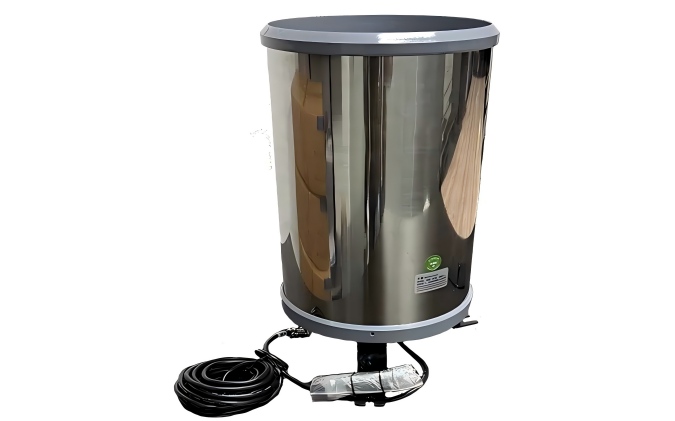
A rain gauge is designed to collect and measure precipitation over a defined period. Depending on the instrument design, the output may represent accumulated rainfall, individual rainfall events, or time-based precipitation data.
For solar monitoring, the important point is not simply the rainfall total. The data becomes more valuable when it can be associated with a specific time and compared with other measurements from the same site.
For example, an operator reviewing a period of reduced PV performance may look at irradiance, module temperature, wind conditions, and rainfall data together. If a rainfall event occurred shortly before the performance changed, that information can help provide context for further investigation.
The measurement quality of the rain gauge also matters. Poor installation, blocked collection components, nearby obstructions, or inadequate maintenance can affect the accuracy of precipitation measurements. A sensor should therefore be treated as part of the overall measurement system rather than as an isolated device.
For project specifications, users should review the measurement principle, accuracy, resolution, output interface, power requirements, environmental rating, and communication method before selecting a particular model.
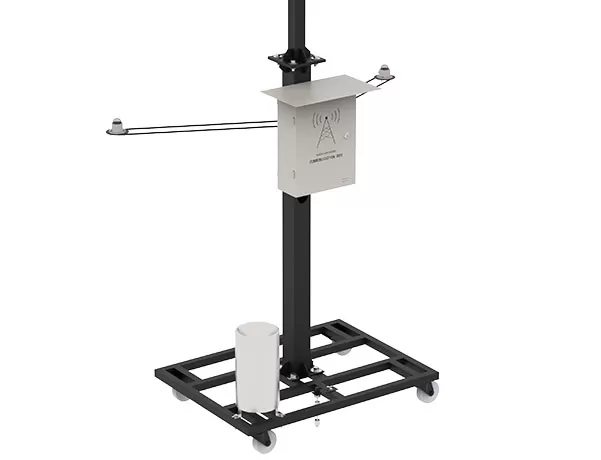
A rain gauge is normally one component of a broader meteorological monitoring system. A typical solar weather station may also include sensors for irradiance, ambient temperature, module temperature, wind speed, wind direction, and humidity.
Each measurement answers a different question. Irradiance helps explain the solar resource available to the PV modules. Temperature provides information about environmental and module operating conditions. Wind measurements are useful for weather assessment and equipment protection. Rainfall data adds another layer by showing when and how much precipitation occurred at the site.
The physical installation of a rain gauge deserves careful attention. Nearby structures, trees, equipment, or other obstructions can interfere with the natural collection of precipitation. The sensor should be positioned according to the manufacturer's installation requirements and the meteorological objectives of the project.
Maintenance is also straightforward but important. The collection area and moving or sensing components should remain clean and free from debris. Regular inspection can help identify blockages, physical damage, or other conditions that could cause abnormal readings.
For a large PV project, consistent installation across monitoring stations is especially useful. If different sensors are installed under significantly different conditions, comparing rainfall data between locations may become less meaningful.
Soiling is one of the practical reasons to include a rain gauge in a solar monitoring system. Dust, pollen, industrial particles, agricultural residue, and other materials can accumulate on PV module surfaces. How quickly this happens depends heavily on the local environment.
Rain can remove some of this material, but the cleaning effect is not uniform. A short or light rainfall event may have limited impact, and water can sometimes leave deposits behind after evaporation. A stronger rainfall event may wash away more loose material, but even then, the actual effect depends on the type of particles present on the module surface.
This is why rainfall measurements should not be treated as a direct indicator of module cleanliness. Instead, the rain gauge provides supporting information that can be compared with energy-yield trends, soiling measurements, cleaning records, and other site observations.
For example, if a plant experiences a prolonged dry period followed by measurable rainfall and a subsequent change in performance, operators can investigate whether the event coincided with a reduction in soiling losses. Over time, this type of historical comparison can help develop a more practical cleaning strategy for the site.
Zeyang offers environmental monitoring products for applications such as solar PV projects. Its rain gauge can be considered when precipitation measurement needs to be incorporated into a broader weather-monitoring setup.
A rainfall measurement becomes much more useful when operators can access it alongside the rest of the plant's operating data. This requires a suitable communication and data architecture between field sensors and the central monitoring platform.
In a PV plant, the rain gauge may transmit measurement data to a data logger, weather station controller, or another field device. From there, the information can be passed to a central monitoring platform for storage, visualization, analysis, and reporting.
This allows rainfall events to be viewed alongside other measurements rather than as isolated weather records. Operators can examine precipitation together with irradiance, temperature, wind, and power output to better understand what was happening at a particular time.
This is also where weather monitoring and SCADA can complement each other. A SCADA environment focuses on plant equipment and operational information, while meteorological sensors provide environmental context. Bringing the two data sets together can make troubleshooting and performance analysis more informative.
Communication compatibility should therefore be considered when specifying a rain gauge. The sensor needs to fit into the communication architecture already planned for the project, whether data is being collected locally or transmitted to a centralized platform.
Selecting a rain gauge starts with understanding what the solar project actually needs to measure. The required measurement range, accuracy, resolution, output format, power supply, communication interface, and environmental conditions should be defined before comparing products.
Installation requirements should also be included in the specification. The project team should determine where the sensor will be installed, how it will be mounted, how it will be protected, and how maintenance personnel will access it. These practical details can affect measurement quality just as much as the sensor specification itself.
For utility-scale projects, integration is particularly important. A sensor that produces accurate measurements but cannot communicate smoothly with the site's data acquisition architecture may create unnecessary engineering work later.
| Selection Factor | Why It Matters | What to Review |
|---|---|---|
| Measurement Accuracy | Determines how reliably precipitation conditions are represented | Manufacturer's stated accuracy and test conditions |
| Resolution | Influences how small changes in rainfall can be recorded | Data resolution and recording interval |
| Output Interface | Determines how rainfall data reaches the monitoring system | Available communication and signal interfaces |
| Environmental Suitability | Supports stable operation outdoors | Temperature range, moisture resistance, and installation requirements |
| Maintenance | Helps keep measurements consistent over time | Cleaning, inspection, calibration, and access requirements |
| System Integration | Allows rainfall data to be used with other PV measurements | Compatibility with data loggers, weather stations, and plant monitoring systems |
There is no single specification that makes one rain gauge suitable for every solar project. The right choice depends on the project's measurement objectives, local weather conditions, monitoring architecture, and maintenance plan.
For teams reviewing different environmental monitoring technologies, Zeyang's product solutions provide additional options for building a broader measurement and control setup. When the project has particular communication, installation, or integration requirements, it is also useful to contact Zeyang's technical team and discuss the application before final equipment selection.
Rainfall may seem like a simple environmental measurement, but its relationship with PV plant operation can be more useful than it first appears. Rain can affect module soiling, cleaning requirements, site conditions, and the interpretation of short-term changes in energy production.
A properly selected rain gauge provides local precipitation data that can be combined with irradiance, temperature, wind, and plant-performance information. Rather than using rainfall data on its own, operators can use it as part of a broader monitoring strategy to better understand what is happening at the site.
For utility-scale PV projects, the best approach is to define the measurement objective first, then evaluate sensor accuracy, installation conditions, communication requirements, maintenance needs, and integration with the existing monitoring architecture. A rain gauge that fits naturally into the overall weather and plant monitoring system can provide useful data throughout the operating life of the solar project.
A rain gauge measures local precipitation and provides weather data that can help operators analyze soiling, cleaning conditions, and changes in PV plant performance.
No. The cleaning effect depends on rainfall characteristics, dust type, module surface conditions, and other local factors. Rainfall data should be considered together with soiling and performance information.
A rain gauge should be installed where nearby structures, trees, and other obstructions are unlikely to interfere with precipitation collection. The manufacturer's installation requirements should also be followed.
Yes. A rain gauge can provide data to a weather station, data logger, or monitoring platform, depending on its output interface and the project's communication architecture.
Key factors include measurement accuracy, resolution, environmental suitability, output interface, power requirements, installation conditions, maintenance, and compatibility with the existing monitoring system.
Rainfall records provide useful context for cleaning decisions and performance analysis. Operators can compare precipitation events with soiling conditions, cleaning records, and energy-yield data to improve maintenance planning.