Call
+86 15618559327

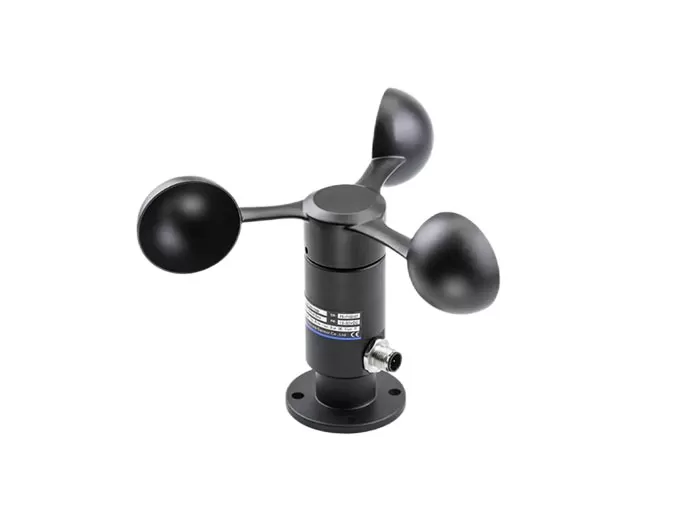
Developed based on the principle of non-contact magnetic sensor measurement;
Built-in high-performance sensor, the collected data has high precision and high reliability;
The wind speed measurement range is wide,and the starting wind speed is low;
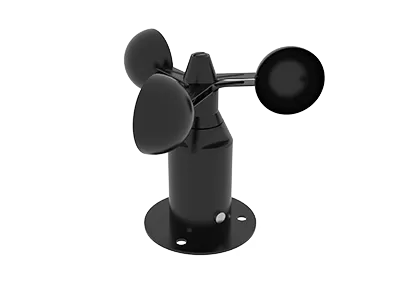
The wind speed sensor adopts an all-metal shell,which has good corrosion resistance and strong wind resistance;
The wind cup is made of stainless steel,which can be used under harsh conditions;
The circuit protection adopts a fault-tolerant design,and the sensor will not be damaged in the case of wrong wiring;
Comply with CE EMC standard,multi-level lightning protection and anti-surge design;
Wind speed sensor can work in a wide voltage range of 15-30VDC.

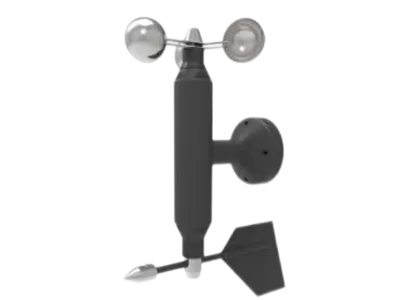
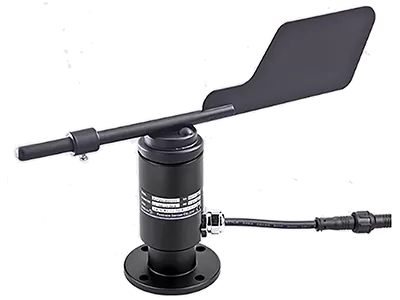
AIT- FST201 Wind Combined Sensor | |
 | |
Conforms to Certification | CE/EMC |
Electrical Parameters | |
Operating Voltage | 15-30VDC,5V/24V(pulse) |
Operating Current | 100mA Max |
Entry cable | Aviation connector |
Attachment plug | 4-core connector |
Mechanical | |
Colour | Cationic Oxidized Black |
Main Material | Aluminum alloy/polyester coating |
Anemometer Cup Material | Aluminum alloy/polyester coating |
Parameter Weight | 0.8kg |
Operating Temperature | -40℃~+85℃ |
Operating Humidity | 0%~95%(RH) |
Vibration Resistance Level | 5-10Hz,d=3mm 10-500Hz,a=2g |
Ingress Protection (IP) rating | IP65 |
Smoke Level | ISO9227 720h |
Mechanical Structure | Grating mechanical structure |
Meteorological | |
Starting Threshold | ≥0.5m/s |
Anti-wind Level | >70m/s 30min |
Static Protection | 15KV |
Accuracy | ±0.5m/s(<5m/s);±3%FS(≥5m/s) |
Wind Speed Measurement Range | 0~30m/s /0~50 m/s |
Output Signal | 4~20mA,0~5VDC, 0~10VDC,pulse,RS485 (Modbus) |
Transmission Mode | MODBUS protection |
For buyers evaluating a wind anemometer for sale, a wind speed sensor operates by converting airflow velocity into measurable electrical signals. Most wind speed sensor designs use rotating cups or ultrasonic transducers. In a cup-type structure, wind forces the cups to rotate; the rotational speed is directly proportional to wind velocity and is detected by magnetic or optical encoders. In an ultrasonic wind speed sensor, pairs of transducers emit and receive high-frequency sound waves. Changes in transit time—caused by airflow direction and speed—are calculated to determine precise wind velocity.
When comparing wind speed indicators for sale, real-time, high-accuracy measurement is important for applications such as environmental monitoring, meteorological stations, industrial ventilation control, and smart infrastructure. Its robust structure and stable signal output ensure reliable performance even under harsh outdoor conditions.